Testing the efficiency of the swallow and bite.
What can your smile do for you?
Testing the efficiency of the swallow and bite.

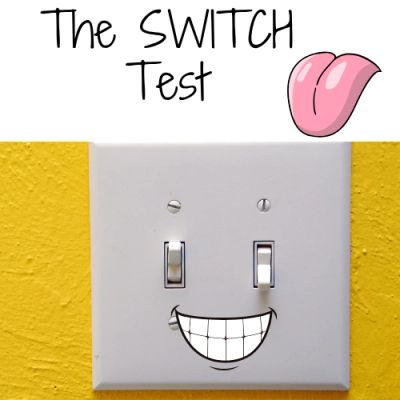
The SWITCH Assessment is an acronym for Strength With Integration of Trigeminal and Cranial Harmony.
Neurological signals originating from the swallow and the bite affect the postural control of the body's musculoskeletal system through simple, yet sophisticated neural circuits
The SWITCH Assessment has been designed to not only educate the on the level of function and resilience of the patient, but also to guide treatment sequencing and decisions.
The SWITCH Test allows the patient's own body to show whether or not their swallow and/or bite are supporting them through everyday function.
Simple clinical assessments allow the provider team to assess the patient's level of function and resilience in their efforts to support comprehensive and efficient treatment options for thier patients.

The SWITCH Test allows healthcare providers to perform reliable and repeatable assessments for their patients.
Anyone who has ever had an electrical outage knows the inconvenience of not having enough power to turn the lights on.
A similar concept applies to the human body.
Without an apppreciation for or understanding of the neural circuits that support swallowing, chewing and sleep, the healthcare profession is "in the dark".


Imagine the 12 cranial nerves of the brainstem as the breaker box that regulates electricity to your home.
If there is a problem with the breaker, you will not have power to the lightbulbs or appliances that need electicity to work.
If the patient has a problem with their cranial nerves (especially the nerves that supply the tongue), the patient will have swallowing and breathing challenges.
Therapies designed to tuen the power back on are called Oral Neuromyofunctional Therapies and are an important part of the Neurofunctional Dental Medicine approach to care.

There is much more to understand related to human function than what can be easily measured or seen. Tongue and breathing function are controlled by the brain and the patient's ability to regulate the balance between rest and digest and flight or fight.

DId you know that the emerging literature points to the functino of the trigeminal nerve is sleep dysfunction and neurodegenerative diseases (Alzheimers) as well as physical/athletic performance?

Assessment is importat to understand not only oral function, but also behavioural challenges and compensations.
The influence of the retained startle reflex (Moro) on fascial restrictions affecting tongue mobility (often misdiagnosed as a tongue tie)

Vestibulospinal Pathways
The Switch Test is a clinical diagnostic tool that assesses the relationship between oral function, neuromuscular patterns, and nervous system responses — providing real-time functional intelligence to guide treatment planning.
1. A Neuromuscular Diagnostic Tool Evaluates how shifts in tongue posture, jaw position, and dental contacts influence nervous system function and muscle performance throughout the body.
2. Rooted in Functional Neurology Uses muscle response testing as a biofeedback mechanism, revealing patterns of neurological facilitation or inhibition directly tied to oral conditions and position changes.
3. A Functional Snapshot Captures a moment-to-moment picture of the patient's neurofunctional status — not just anatomy, but how the entire system is actually performing at rest and under load.
The Switch Test: Clinical Application
How It's Performed
Who Benefits from Testing
What the Switch Test Reveals
The Switch Test transforms invisible neurofunctional patterns into clear, actionable clinical data.
Tongue Dysfunction Reveals whether the tongue is contributing to neurological modulation, inadequate cranial structural support, or compromised airway dynamics — including dysfunctional resting posture patterns.
Occlusal Imbalances Identifies occlusal relationships that switch the nervous system into compensation patterns, stress modulation (low tongue posture) or facilitation states, informing bite equilibration and appliance design.
Airway Involvement Uncovers compensatory patterns related to stress (vagal tone modulation), which can result in low tongue posture impacting oropharyngeal airflow — how the patient's system has adapted, and which postural corrections unlock better neurological function.
Treatment Progress Tracking Used before and after each intervention (laser therapies, ALF, Oral NeuroMyoFunctional Therapies), the Switch Test objectively quantifies functional improvement over time.
Trigeminal, Visceral and Vestibular Inputs May Improve Cognitive Functions by Acting through the Locus Coeruleus and the Ascending Reticular Activating System: A New Hypothesis
https://www.frontiersin.org/articles/10.3389/fnana.2017.00130/full
Descending Influences on Vestibulospinal and Vestibulosympathetic Reflexes
http://www.frontiersin.org/articles/10.3389/fneur.2017.00112/full
Evidence Based Medicine – New Approaches and Challenges
There are many more references in support of the neurofunctional approach to care. Please visit our website using the following link